
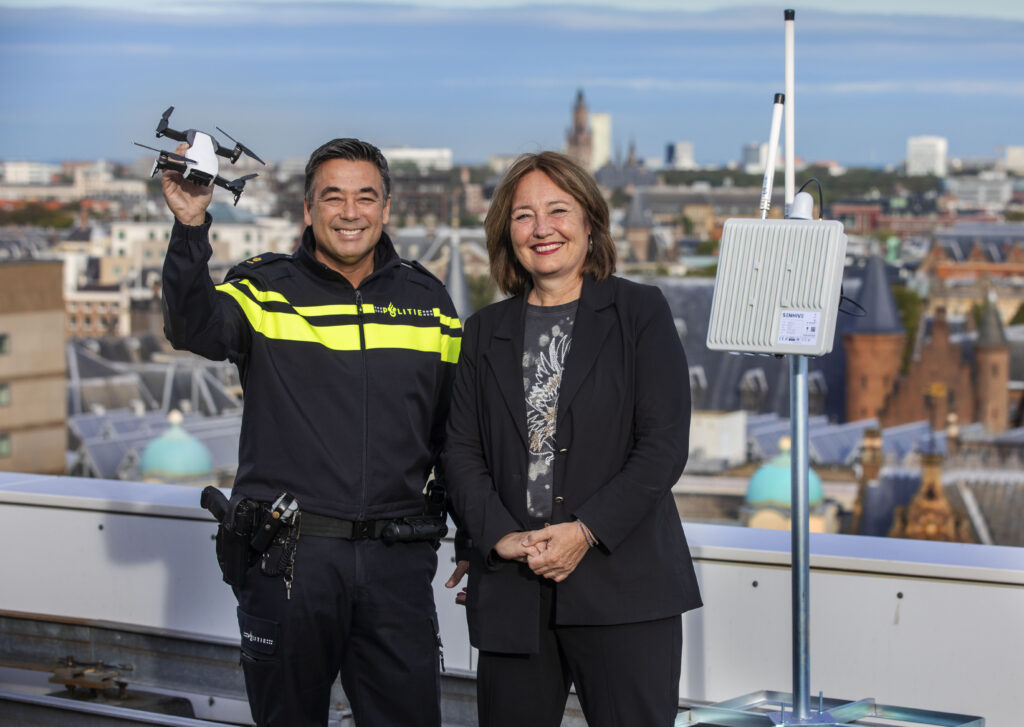
The municipality, together with the police, has set up a pilot project using drone detection to gain insight into drone activity above The Hague. The drone detection system detects the radio signals used to control drones and shows where drones are operating within the city. The aim of the pilot is to gain a clearer picture of how drones are used in and above the city, so that this use can be addressed in a careful and responsible way.
Drones are being used more and more, and technological developments are moving fast. The number of drones in use is increasing, which brings new points of attention for the use of airspace.
Both privacy and safety play a role in this. To address these matters in a careful way, the municipality and the police have worked together to gain better insight into drone use above the city. This insight is important to support discussions about safe and responsible use of drones, now and in the future. In other parts of the world, drones are already being used for purposes such as parcel delivery. Whether, and under what conditions, such applications would be suitable for The Hague requires a shared and well-considered assessment.
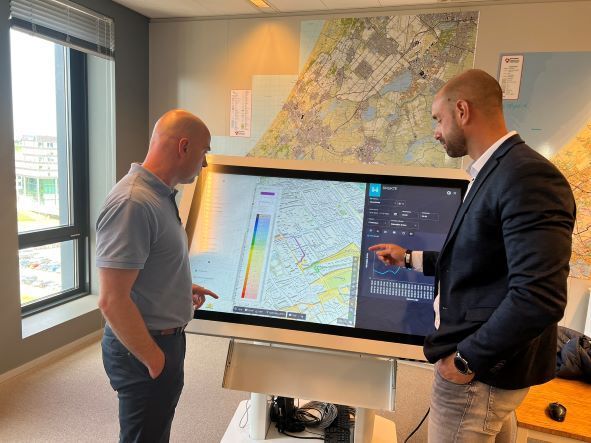
Through the drone detection pilot, the municipality and the police aimed to gain better insight into drone flights above The Hague. The detection system made it visible when and where drones were flying over the city. Until then, this overview was not available, while it was needed to properly consider the safe use of low-altitude airspace, the approach to supervision, and the roles of the police, municipalities and other relevant parties.
The purpose of the pilot was clearly focused on building understanding, not on enforcing against illegal drone flights. After the pilot period, the results were evaluated, and based on this evaluation the municipality and the police considered whether drone detection should be continued.
In most parts of The Hague, no-fly zones apply. This means that flying a drone is not permitted in these areas, such as above nature areas, near ministries and embassies, and along the approach route of Rotterdam The Hague Airport. A maximum flight height of 120 metres also applies. While most drone users had no harmful intentions, not every drone owner was aware of the applicable rules. In this respect as well, the drone detection pilot provided useful insight.
The police and the municipality are carrying out this use case within the SHIELD innovation hub. Within SHIELD, the Municipality of The Hague and the police work together on technological innovation in the field of safety and security. SHIELD is based at the HSD Campus.
For this pilot, three European-made drone detection sensors are being used. The system receives the radio signals used to control drones. The sensors have a wide range and are installed on three rooftops at different locations across The Hague.
Interesse in meer informatie over deze use case? Neem dan contact op met Iris van Neeleman (iris.neeleman@denhaag.nl) of met Danny de Wekker (danny.de.wekker@politie.nl. For general questions about Living Lab Scheveningen, you can also email smartthehague@denhaag.nl.